
DeKalb County Criminal Court Records
A DeKalb County criminal court record is the case-level file maintained through the Circuit Court system once a criminal case is filed. It may begin with a complaint, information, indictment, warrant, summons, or bond entry, then continue through arraignment, pretrial motions, hearings, plea or trial, disposition, sentencing, fines, costs, restitution, and probation terms. The DeKalb County Circuit Clerk serves the Circuit, Associate, and Probate Divisions, and the court record is distinct from the Sheriff's arrest record or the Daviess/DeKalb Regional Jail custody record.
DeKalb County is part of Missouri's 43rd Judicial Circuit. Criminal matters may involve associate circuit activity for preliminary or lower-level matters and circuit-level proceedings for felony and other assigned cases. Municipal or traffic matters may also become criminal court records when the charge involves DWI, driving while revoked, or another offense handled as a criminal case. For a closer look at the charge filing stage, use the DeKalb County arrest records and court charges page.
Search DeKalb Criminal Court Records
The main online path is Missouri Case.net. Search by case number if it appears on a summons, bond paper, ticket, attorney notice, or court letter. Search by litigant name when the case number is unknown. After opening the case, confirm that the county, court, case type, and party name match the person or charge being researched. Case.net can show public criminal case headers, docket entries, charges, hearings, dispositions, and public document availability when allowed by court rules.
- Open the official Missouri Case.net search rather than a third-party data site.
- Search by case number or defendant name, then confirm DeKalb County or the proper division.
- Read the charge list and docket entries together, because a charge may be amended, reduced, dismissed, or resolved separately.
- Check the disposition and sentence fields before treating a charge as an outcome.
- Contact the Circuit Clerk for certified copies, older records, or public records not available online.
The Missouri DPS DeKalb County victim-services directory identifies local criminal-justice contacts and is one of the image sources assigned to this page.
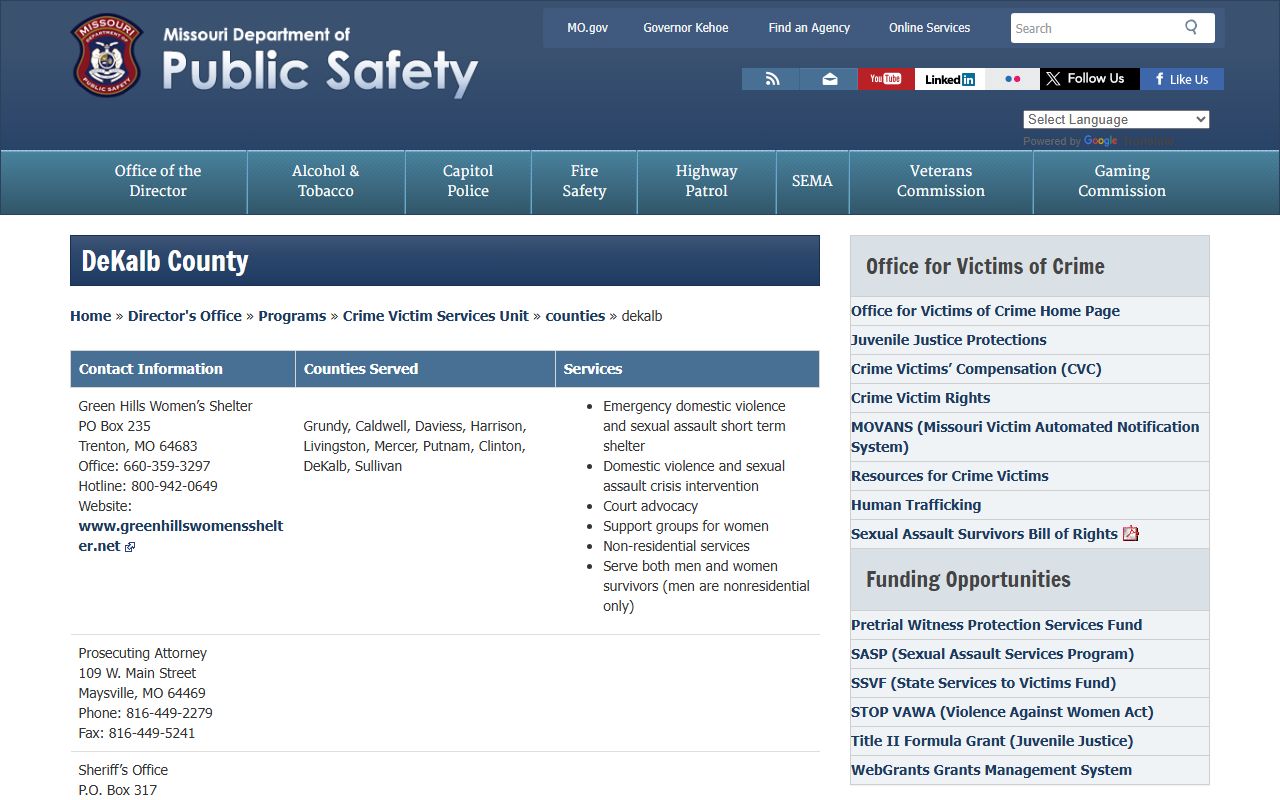
The directory supports the local prosecutor and sheriff context, but the court case file itself is searched through Case.net and requested through the Circuit Clerk.
DeKalb Criminal Case Flow
A criminal court record grows as the case moves. The charge is only the start. Later docket entries may show arraignment, counsel appearance, bond review, motions, continuances, plea negotiations, trial settings, judgment, sentencing, probation, payment obligations, and warrant activity. A single case can include multiple counts, and each count may end differently. That is why the disposition must be read count by count.
Case flow: Charges Filed › Arraignment › Pretrial and Motions › Plea or Trial › Disposition › Sentencing
| Stage | What Happens |
|---|---|
| Charges Filed | The Prosecuting Attorney files a complaint, information, or other charging document with the court. |
| Arraignment | The defendant is brought before the court, the charge is addressed, and a plea may be entered. |
| Pretrial and Motions | The parties file motions, exchange notices, handle bond issues, and set hearings or trial dates. |
| Plea or Trial | The case is resolved by plea, dismissal, trial verdict, or another court action. |
| Disposition | The court records the outcome of each charge or count. |
| Sentencing | The court enters jail, prison, probation, fine, cost, restitution, or other sentence terms after conviction. |
DeKalb Criminal Record Fields
Criminal court records should be read as a full sequence, not as a single charge label. Case headers identify the court and parties. Docket entries show the dates and actions. Charge fields show what the prosecutor filed and whether the charge changed. Disposition fields show the outcome. Sentence fields show the court's ordered punishment or conditions. The public record may omit documents or data that are sealed, expunged, juvenile, redacted, or not available remotely.
| Field | What It Shows |
|---|---|
| Case Number | The Missouri court number used to identify the criminal case and related docket activity. |
| Defendant | The person charged in the criminal case, subject to public-access and redaction limits. |
| Prosecutor | The public attorney or office handling state criminal charges. |
| Charges | The filed counts, statutes, severity levels, and descriptions as amended or resolved. |
| Bond or Warrant | Bond settings, warrant activity, summons entries, capias entries, or recall information when public. |
| Plea | The defendant's answer to a charge, such as guilty or not guilty, when entered and public. |
| Disposition | The final result of a charge, such as guilty plea, dismissal, acquittal, or other outcome. |
| Sentence | Jail, prison, probation, fine, cost, restitution, suspended sentence, or other court-ordered terms. |
Charges vs Convictions
A charge is an accusation filed in court. It is not the same as a conviction. A DeKalb County criminal court record can show charges that were pending, amended, reduced, dismissed, or resolved by a plea or trial. A conviction appears only after a guilty plea, guilty verdict, or other conviction-producing court action. The distinction is important for criminal records, employment screening, licensing review, and a reader's basic understanding of what the court record proves.
| Point | Charge | Conviction |
|---|---|---|
| Meaning | An accusation filed by the prosecutor or presented to the court. | A final court result based on plea, verdict, or other conviction action. |
| Record Stage | Appears early and may change during the case. | Appears after disposition and may lead to sentencing. |
| Outcome Risk | May be dismissed, amended, reduced, or withdrawn. | May carry fines, costs, jail, prison, probation, restitution, or other terms. |
| How to Read | Check status and docket entries. | Check disposition and sentence fields. |
DeKalb Criminal Court Contacts
Missouri uses the title Prosecuting Attorney rather than District Attorney. The Missouri Association of Prosecuting Attorneys directory identifies Rachel Townsend as the DeKalb County prosecutor. The state DPS directory lists the Prosecuting Attorney at 109 W. Main Street, Maysville, Missouri 64469, phone 816-449-2279, fax 816-449-5241. Prosecutor contact is for prosecution, victim/witness, charging, restitution, and criminal-case questions, not defense advice.
The public defender office serving DeKalb County is Missouri State Public Defender District 43 in Chillicothe. The official District 43 public defender page lists District Defender Kelly Miller, 2007 Washington St, Chillicothe, MO 64601, phone 660-646-3343. Public defender eligibility and representation are handled through the state public defender system for qualifying criminal matters.
The Missouri prosecutors directory is an assigned source image for this page.
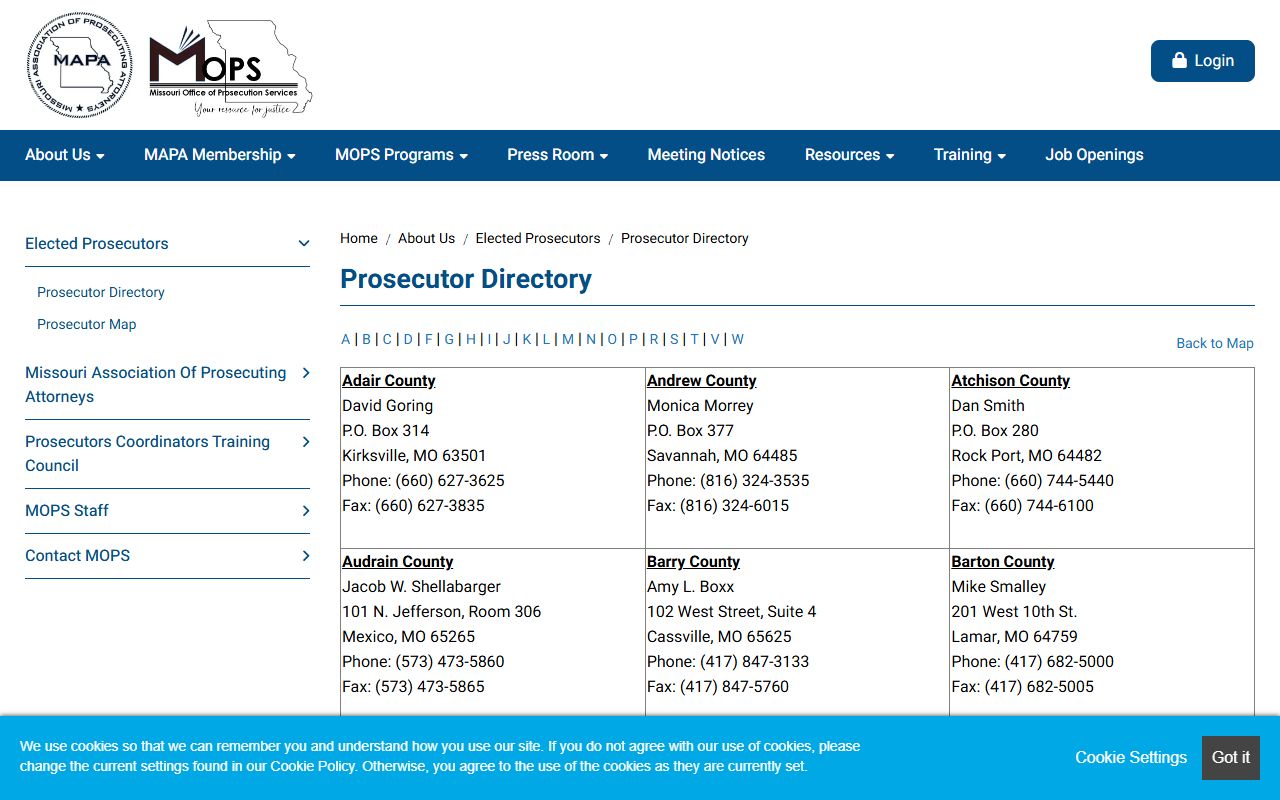
The prosecutor directory helps identify the charging office, while the court record itself shows what charges were filed and how the court handled them.
Sealed vs Expunged Records
Restricted criminal records require careful wording. A sealed record is hidden from ordinary public access because of a court order, statute, or rule. An expunged Missouri record under RSMo 610.140 is closed from general public access after the court grants the petition. Closed criminal records are not destroyed in the practical sense described by RSMo 610.120; they can remain available for authorized criminal-justice, licensing, screening, or statutory uses.
| Point | Sealed | Expunged |
|---|---|---|
| Public View | Restricted by court order, rule, or law. | Closed from general public access after the court grants expungement. |
| Record Status | Still exists but is not open to ordinary public inspection. | Closed and handled under Missouri expungement and closed-record statutes. |
| Access | Usually requires authority, party status, or court order. | May remain available for specific authorized uses listed by law. |
| Local Filing | Contact the court connected to the record. | File in the court with jurisdiction over the eligible record. |
The criminal expungement statute is one of the assigned image sources for DeKalb County criminal court records.
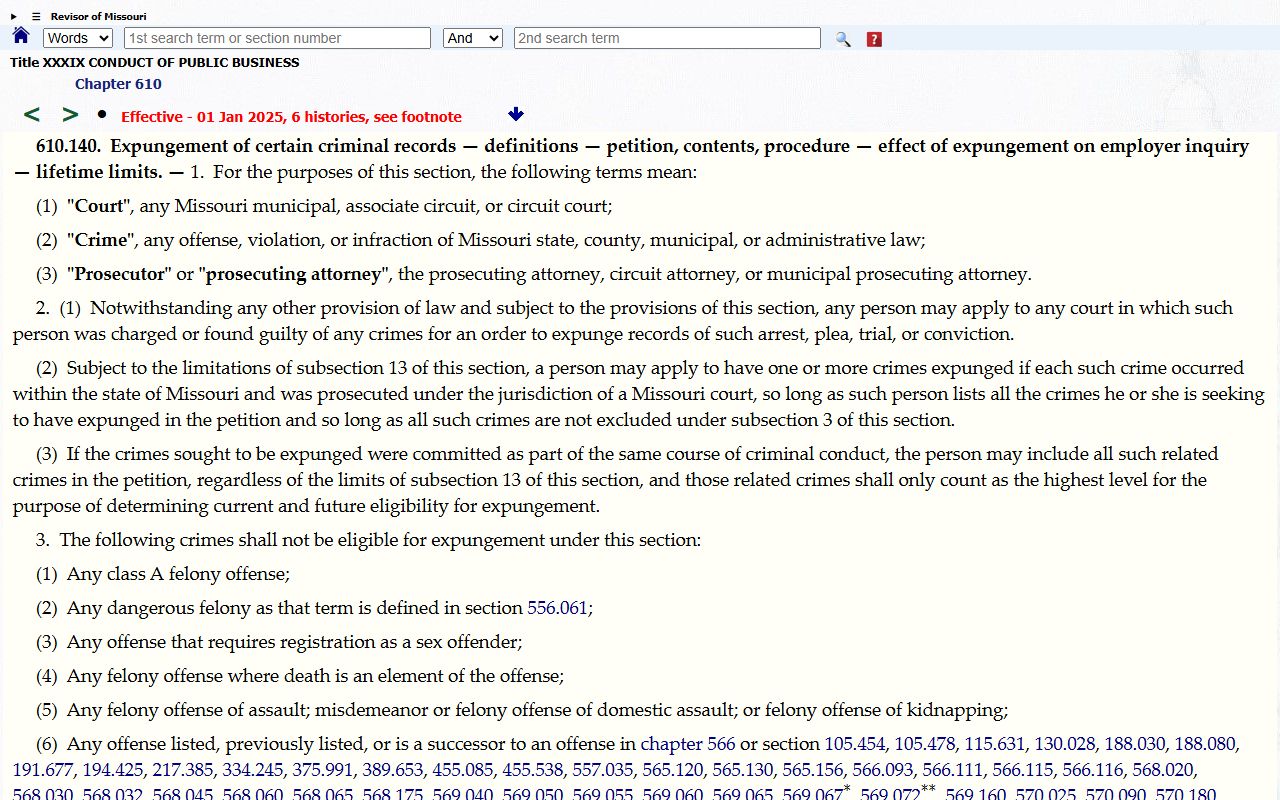
Expungement affects public access to the criminal court record, but eligibility and strategy questions require legal advice, not clerk guidance.
Public Access to DeKalb Criminal Records
Missouri policy favors open public records under RSMo 610.011, and RSMo 610.023 addresses public inspection and copying. Court records also have court-specific public-access rules and redaction requirements. For DeKalb County criminal court records, that means many public case details may be visible through Case.net, while certified copies, older files, restricted documents, and exact court records may require the Circuit Clerk.
Note: Juvenile, sealed, expunged, medical, protected-address, and personal-identifier information may be withheld or redacted from public criminal records.
The official public defender application process is assigned as a source image because it affects defendants with pending criminal matters.
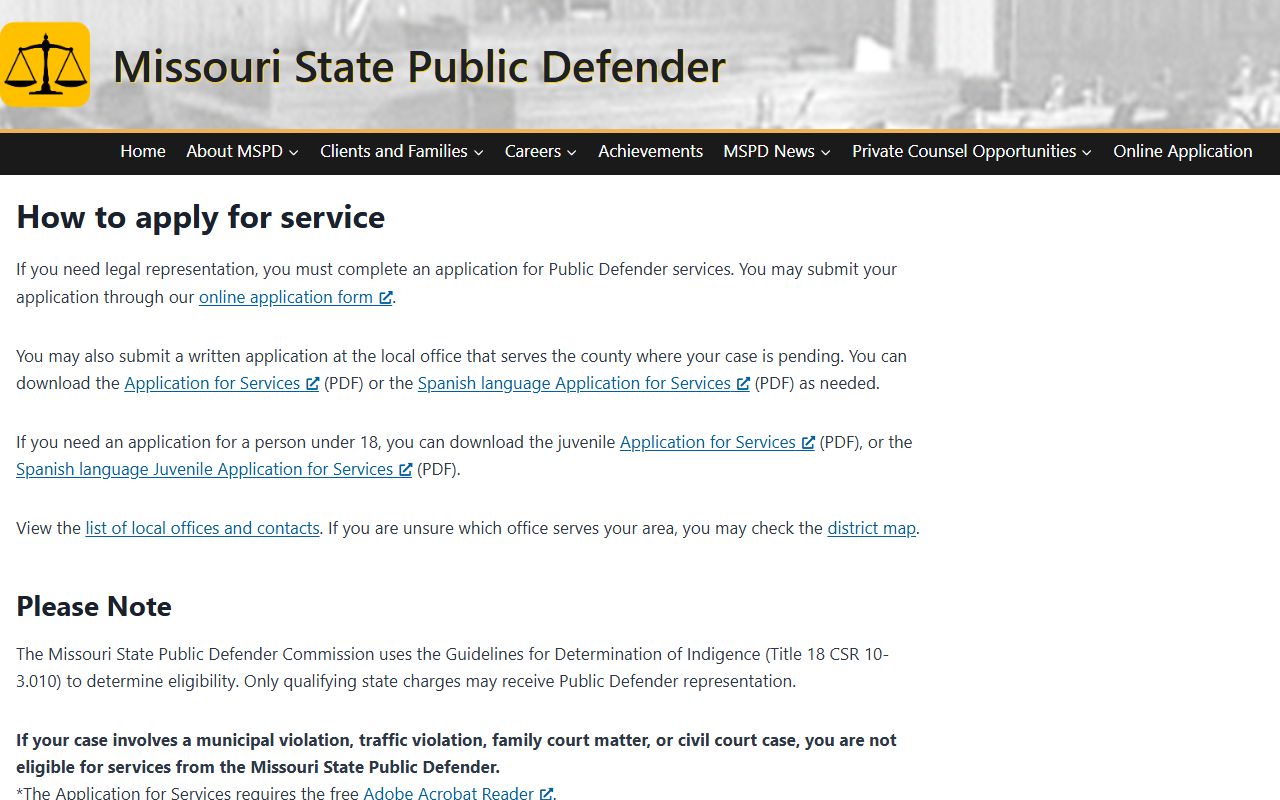
Public defender application materials do not replace the court docket, but they help explain where an eligible defendant can seek representation for a pending case.
Restricted DeKalb Criminal Court Records
DeKalb County criminal court records may be restricted when they involve juvenile proceedings, sealed filings, expunged records, protected victims, confidential informants, mental-health data, medical information, protected addresses, or personal identifiers. A public search result may show no case, limited case data, or only a docket shell when the underlying document is not open. Missing online information does not prove that no record exists.
For case status, certified copies, or unclear docket entries, contact the Circuit Clerk. For charging decisions or victim/witness prosecution questions, contact the Prosecuting Attorney. For defense strategy, eligibility for representation, or consequences of a conviction, contact a licensed attorney or the public defender if eligible. A general criminal record search should not be used as a consumer report for FCRA-regulated decisions.
The District 43 public defender source is also assigned to this page.
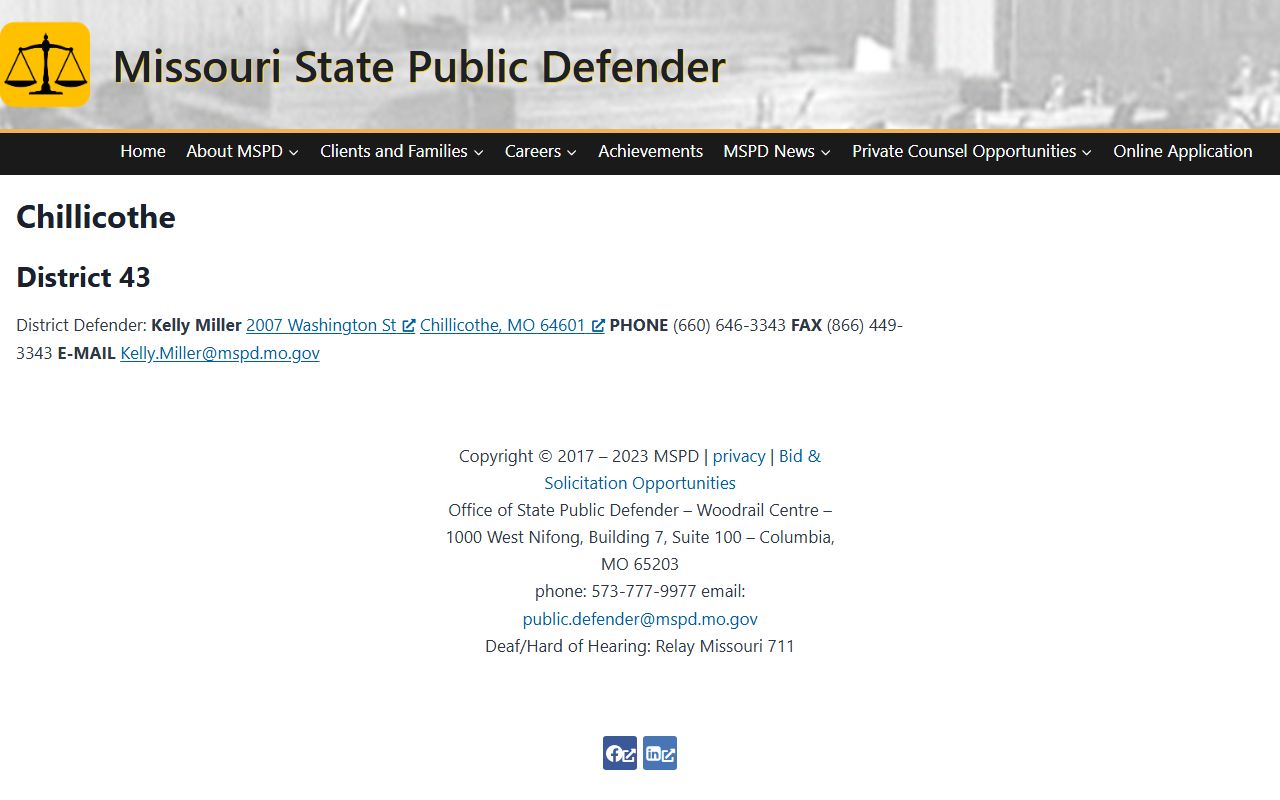
District 43 serves DeKalb County defendants who qualify for public defender services in covered criminal matters.